


Together Loans
4.3272.00 Reviews
App Specs
- Version
- 9.1.2
- Updated On
- License
- Free
- Downloads
- 100,000+
- Developer
- Transform Credit Inc
- Categories
- Finance
- Platform
- Android
Screenshots
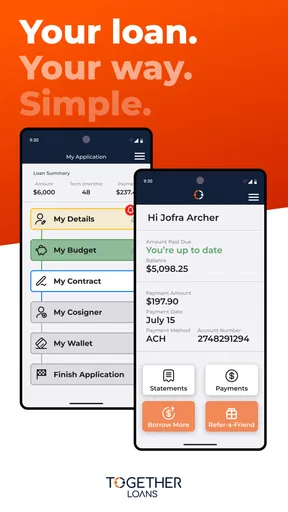
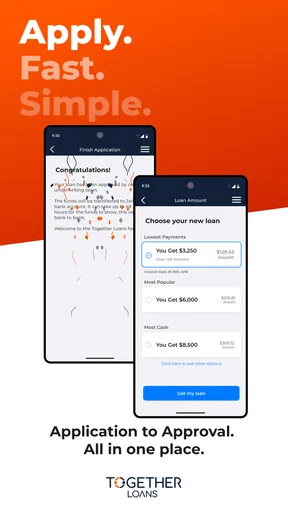
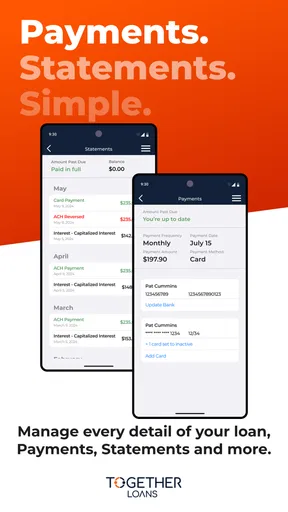
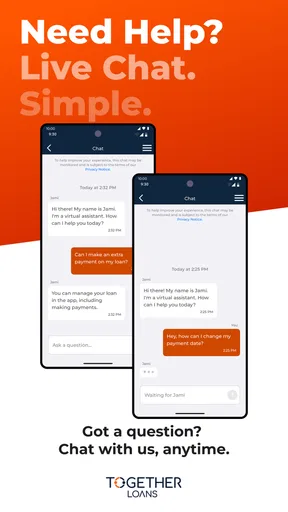
 Analysis by AppCompare
Managing a loan is rarely something I want to turn into a long administrative task. I usually need a quick way to check what is happening, understand what action is expected, and move on with my day. Together Loans is built around that narrow purpose: it is a finance app from Transform Credit Inc for managing a loan in one place. After using it, I see its value less as a full personal-finance hub and more as a focused companion for people who already have a relationship with the lender.
The app is free to install and aimed at Everyone, which makes it approachable on paper. It has reached over 100 thousand installs and holds a 4.3 average from around 600 ratings, so it is not an obscure experiment. The current version is 9.1.2, and it runs on Android 7.0 or later. Those details matter because a loan-management tool needs to be available on ordinary phones, not only recent premium devices.
How Together Loans feels to use in everyday situations
I find a dedicated loan app most useful when it helps me answer one practical question without turning a quick check into a full budgeting session. In this section, I focus on how that narrow purpose fits into ordinary routines, including the small bit of preparation that can make a time-sensitive account check less stressful.
Readability and navigation for a focused financial task
My first impression is that the app’s limited scope is its biggest advantage. Instead of asking me to connect bank accounts, categorize spending, set savings goals, or learn a large dashboard, it concentrates on the loan itself. That focus can make the first visit less intimidating, especially for someone who does not want to become familiar with a complete budgeting system just to check a repayment-related detail.
I would approach the app with one question in mind: can I find the information I need without guessing? A loan app should make the important path obvious, whether I am checking an upcoming obligation, reviewing account information, or trying to understand what to do next. Together Loans is most useful when treated as a direct account-management tool rather than as a place to explore financial education or broader money-planning features.
That distinction is important for readability. A person who is already comfortable with mobile banking may find the focused layout easier than a general finance app packed with charts and categories. On the other hand, anyone expecting a complete picture of household finances may feel that the experience is too narrow. I would not choose it as my only finance app; I would use it alongside a banking or budgeting app if I wanted wider oversight.
For a realistic example, imagine checking the loan during a lunch break because a payment date is approaching. I would rather open a dedicated account screen than search through email messages or a lender’s general website. The practical benefit is not entertainment or discovery; it is reducing the number of steps between opening the app and confirming what I need to know.
Worth Reading Before You Choose

EA SPORTS FC Mobile 26 Is a Bigger Football Game, but It Takes Time

Flipboard Shows What News Apps Must Do Beyond the Feed

Switching to Android Auto Means Rethinking Your Driving Routine

Google Calendar Makes a Crowded Week Easier to Manage

Ludo King Makes the Most of the Minutes Between Plans

Baby Panda World Brings Quick Play to Modern Phones, but Its Game Library Feels Busy
There is also a useful habit I would recommend: after signing in, spend a minute identifying the main account areas before an urgent payment day. That small preparation can prevent rushed tapping later. It is especially helpful for people who are less confident with financial apps, because the stressful moment is the worst time to learn where information is located.
Motor and sensory considerations during account management
Loan management involves actions that should be deliberate rather than hurried. Reading a balance, reviewing a repayment detail, or moving through an account screen can be difficult for someone with limited dexterity, tremors, or fatigue if controls are crowded or require precise taps. I found the focused purpose reassuring, because there are fewer unrelated destinations competing for attention than in a broad money-management application.
Still, a focused app is not automatically accessible to every person. I would judge the experience together with the phone’s own settings: larger system text, display magnification, screen-reader support, contrast adjustments, and touch accommodations can make a substantial difference. Those tools are particularly relevant here because financial information must be read accurately; guessing at a small label or compressed value is not acceptable.
For users with visual sensitivities, the best time to test the app is before an important account task. Open the main screens in a calm setting, increase text size if needed, and check whether the information remains understandable without relying on color alone. If a user has difficulty distinguishing subtle visual states, they should verify important details through another trusted channel rather than assuming that a color or icon communicates enough by itself.
People who use voice control or a screen reader should also try the complete workflow, not just the opening screen. The real test is whether labels are announced in a sensible order and whether an action can be completed without sighted assistance. I cannot treat the Everyone rating as proof of accessibility certification; it describes audience suitability, not support for every disability. My practical advice is to test the exact task each person needs before relying on the app independently.
Situational access when time, attention, or connectivity is limited
Accessibility is not only about permanent disabilities. A person may be using Together Loans one-handed while commuting, dealing with temporary hand pain, reading in bright sunlight, or trying to concentrate while caring for a child. A short, purpose-built loan app can be helpful in these situations because it avoids the mental load of a larger financial platform.
At the same time, financial tasks are a poor match for distracted use. I would avoid making an important account decision while walking, traveling in a noisy vehicle, or switching between several tasks. If I needed to review a repayment detail, I would stop somewhere safe, use a stable connection, and give the screen my full attention. Convenience should shorten the process, not encourage careless confirmation.
A useful workflow is to use the app for routine checking and keep a second record of dates or questions that need follow-up. I would not rely on memory after a quick glance. If something looks unfamiliar, I would capture the relevant detail for my own reference and contact the lender through an official support route rather than acting on an assumption.
This is where the app differs from a lender’s website. A website may be easier for someone who needs a large monitor, browser zoom, keyboard navigation, or help from a support person sitting nearby. The app is more convenient when the phone is the most accessible device, but the website can be the better choice when mobile interaction creates strain or when a user needs a wider view of several pieces of information at once.
What can still create friction
The narrow purpose that makes Together Loans simple can also make it feel incomplete. I would not expect it to replace a bank app, a budgeting service, or a spreadsheet used to plan several debts. Someone comparing loans, tracking household bills, or building a long-term repayment strategy may get more value from a broader tool. Together Loans is strongest when the task begins with an existing loan account and ends with managing that account.
Another possible barrier is confidence. Financial language can be stressful, particularly for users with reading difficulties, limited financial experience, or a language preference that is not well served by the interface. I would take time to read every label and confirmation carefully instead of tapping through quickly. If a term is unclear, the safest next step is to ask Transform Credit Inc for an explanation before making a payment-related decision.
Device age can matter as well. The app supports Android 7.0 and newer, which covers many older phones, but an operating-system requirement is not the same as a guarantee of equally smooth performance on every device. A person using an older handset should test scrolling, text rendering, and sign-in before an urgent deadline. Keeping the phone’s operating system and assistive tools updated may also improve the overall experience, provided the device supports those updates.
Privacy and security are another reason to be intentional. A loan-management app handles information that I would not want exposed on a shared phone. I would use a device lock, avoid signing in on a public device, and be cautious about notifications that might reveal financial details to people nearby. These are sensible habits for any financial service, but they matter even more when the phone is used by family members or coworkers.
I also would not install it solely because it is free. Free removes a purchase barrier, but the real question is whether the app fits the user’s account and preferred way of working. Someone who only wants occasional information and prefers speaking with support may not gain much from adding another app. Someone who regularly needs mobile access to loan details has a clearer reason to keep it available.
Who benefits most from this approach
I think Together Loans is a good fit for an existing borrower who wants a dedicated mobile route to loan management without the clutter of a full financial-planning platform. It is also worth considering for people who find large banking apps confusing and prefer one clearly defined account purpose. Its free availability and support for older Android versions lower the practical barrier to trying it.
I would be more cautious if I needed advanced budgeting, multiple-account aggregation, detailed repayment projections, or extensive desktop-style controls. In those cases, a general finance app, a bank’s web portal, or a carefully maintained spreadsheet may be better. The right choice depends on whether the user wants access to one lending relationship or a complete map of personal finances.
For users with accessibility needs, I would make the decision through a short trial rather than through assumptions. Can the person read the key information with their preferred text size? Can they navigate using touch, voice, or a screen reader? Can they complete the required task without pain, confusion, or assistance? If the answer is yes, the app’s focused design may be genuinely useful. If not, an accessible browser workflow or direct support channel is the better option.
My inclusive verdict after using the app
Together Loans works best as a focused loan companion, not as an all-purpose money manager. I like the idea of keeping loan-related tasks in one dedicated place, and the app’s narrow purpose can reduce visual and mental clutter compared with broader finance alternatives. The free price and Everyone age rating make it easy to consider, while the current Android compatibility keeps it relevant to people who do not own a new phone.
My recommendation comes with a practical condition: test the exact workflow you depend on before a payment deadline. Accessibility varies by person, device, settings, and the complexity of the task. Larger text, magnification, voice features, and a quieter environment may make the difference between a comfortable check and a frustrating one. If the mobile layout does not work for your hands, eyes, attention, or reading needs, use the lender’s other official route instead of forcing the app to fit.
Overall, I would recommend it to borrowers who want straightforward mobile access to their Together Loans account and do not need wider financial planning tools. I would skip it as a replacement for banking, budgeting, or personalized financial advice. Used for the job it is designed to handle, it can make routine loan management less cumbersome; used outside that role, its limited scope becomes much more noticeable.
A practical check before relying on it
For a borrower deciding whether to keep this app, I would start with the task that comes up most often, not with a tour of every screen. If the usual need is simply to look up an account detail, try doing that when there is no deadline and note whether the wording is clear enough to act on. If the need is more involved, such as sorting out a question about a repayment, treat the app as a convenient place to review account information, then confirm any uncertainty with the lender rather than treating a quick glance as an explanation.
That approach also helps answer a common practical concern: does installing it mean I no longer need other financial tools? In my view, no. A bank app remains useful for checking available funds and day-to-day transactions, while a budget or spreadsheet can show how several obligations fit into a monthly plan. This app’s value is the narrower, lender-specific account relationship. Keeping those roles separate makes it less likely that someone will mistake a loan screen for a complete picture of their finances.
There is a small but worthwhile planning trade-off here. Using one dedicated place can reduce the time spent searching, but it also means a borrower should know what to do if a phone is unavailable or the app is inconvenient on a particular day. I would keep important dates in a personal calendar and know the lender’s official alternative for account questions. That is not a criticism of the app; it is sensible backup planning for any task tied to a payment schedule.
Where a dedicated loan app earns its place
Compared with a general finance app, Together Loans has a more specific job and can be easier to approach when all I need is access to this lending relationship. A broad platform may provide a useful combined view of spending and debts, but it can also require more setup and attention. Conversely, a web portal can be preferable for careful reading, accessibility tools, or a larger screen. I would choose between them based on the task at hand rather than expecting one option to be best for every situation.
The clearest everyday use case is a borrower who wants to check an account while away from home, then return to work or family responsibilities without opening a full budgeting session. It is less compelling for someone who is not a Together Loans borrower, wants to compare lenders, or needs calculations across several debts. That boundary is useful: the app is not trying to be a financial command center, and I would not judge it by features belonging to one.
Transform Credit Inc released the app on April 2, 2024, and the 272 written reviews give prospective users more context than the rating alone, though I still would not use public opinions as a substitute for testing the workflow that matters to me. My overall view stays straightforward: use it when direct mobile loan access is the need, and choose a broader or more accessible alternative when the job extends beyond that.
Pros
- Simple loan application process with clear repayment information.
- Useful for comparing borrowing options in one place.
- Accessible from mobile devices at any time.
- May help users with limited access to traditional lenders.
- Provides a convenient way to review loan-related details.
Cons
- Loan availability and terms may vary by location and eligibility.
- Interest rates can be high compared with bank or credit union loans.
- Approval is not guaranteed after submitting an application.
- Sharing financial information raises privacy and security concerns.
- Late payments may lead to extra fees and damage to your credit.
FAQs for Together Loans
What is Together Loans, and how does it work?
Together Loans is a lending service designed to help eligible users explore personal loan options through an online application process. You typically provide personal, financial, and employment information so the service can assess your request and, where applicable, connect you with a suitable lender. Approval, loan terms, and availability depend on factors such as your credit profile, income, location, and the lender’s criteria.
Is Together Loans a direct lender or a loan-matching service?
Before applying, it is important to understand Together Loans’ role in the borrowing process. Depending on the product and market, the service may operate as a lender, broker, or connection platform that introduces applicants to third-party providers. Carefully review the website or app disclosures to identify who would actually provide the money, because interest rates, fees, repayment rules, and customer support responsibilities can vary between lenders.
What information do I need to apply for a loan through Together Loans?
Applicants are generally asked to provide identifying details, contact information, employment and income data, requested loan amount, and banking information. You may also need to confirm your residential status and consent to credit or affordability checks. Only submit accurate information through the official Together Loans website or application, and avoid sharing sensitive details through unofficial links, messages, or third-party download pages.
How much will a Together Loans loan cost, and what should I check?
The total cost depends on the lender, loan amount, repayment period, interest rate, and any applicable arrangement, late-payment, or administrative fees. Do not judge an offer only by the monthly payment, since a longer term can increase the overall amount repaid. Before accepting, review the representative APR, total payable amount, payment schedule, consequences of missed payments, and any cancellation or early-repayment conditions.
Is Together Loans safe to use, and are there alternatives I should consider?
Use Together Loans only after confirming that you are on the official platform and have read its privacy policy, terms, eligibility rules, and lender disclosures. A loan application may involve credit checks and the handling of sensitive financial information, so security and data-sharing practices matter. Compare the offer with your bank, credit union, or other regulated providers, and never pay an upfront fee to guarantee approval.


